
Reducing risks of T-bone crashes
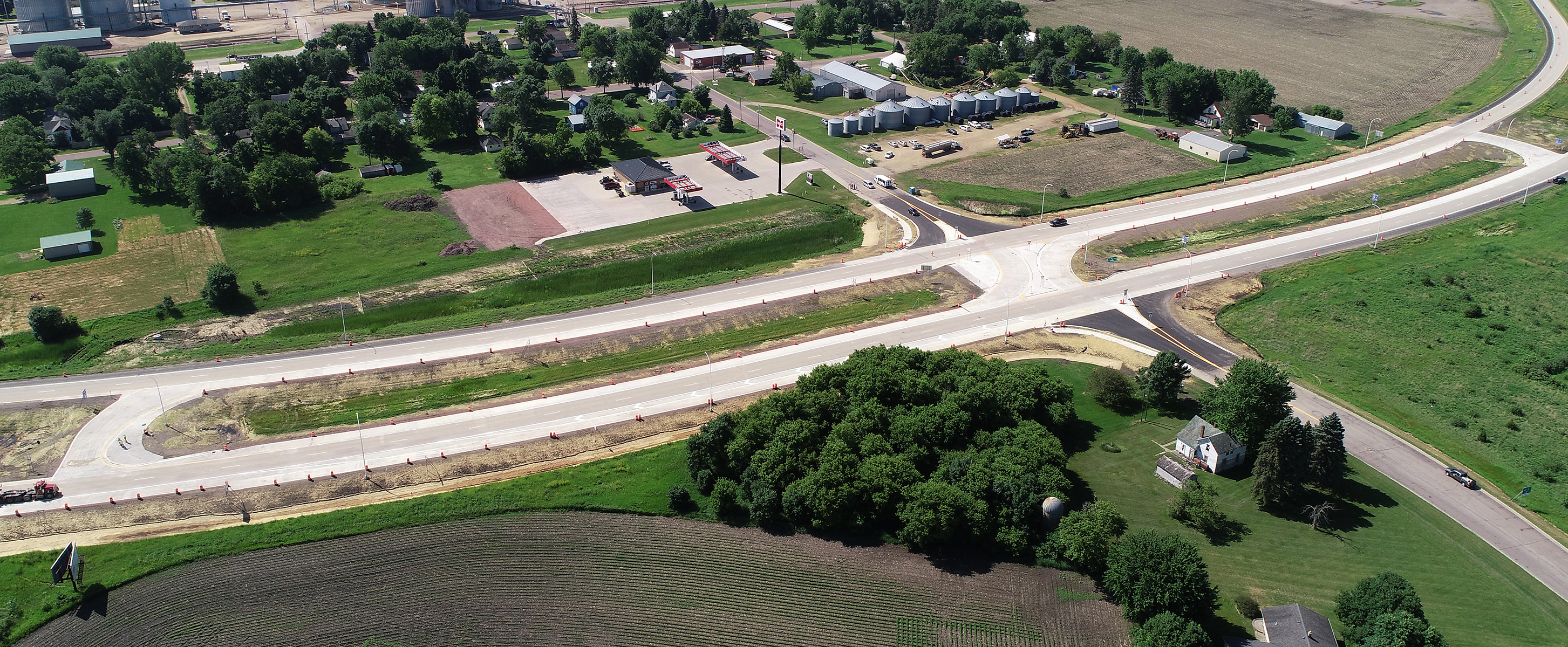
J-turns – also known as reduced conflict intersections or RCUTs – are intersections that decrease fatalities and injuries caused by broadside crashes on four-lane divided highways. When using J-turns, drivers focus on one direction of traffic at a time.
Why J-turns work
With a J-turn, drivers don’t need to wait for a gap in both directions to cross a major road. Drivers from the side street only have to be concerned with one direction of traffic on the highway at a time. Traditional four-lane divided highway intersections have an elevated risk of severe right-angle crashes (commonly called “T-bone” crashes). Motorists from the side street need to look in both directions to cross a four-lane divided highway, and left turns require the same level of attention.
How J-turns work
At a J-turn intersection, drivers always make a right turn, followed by a U-turn. Drivers approach divided highways from a side street and turn right onto the highway instead of crossing traffic. After turning right, drivers cross to the left lane and then make a U-turn at a designated median opening. This reduces potential conflict points and increases safety.
- When making the right turn, you are allowed to cross both lanes and move into the left-turn lane in one motion – when it is safe to do so – to minimize the amount of time in through lanes of the divided highway.
- When you are completing the U-turn, you must yield to oncoming traffic – and stop if necessary – before entering the through lanes of the divided highway.
- J-turns always provide access to local roads. While the route may change slightly in some instances, access to all local businesses and other local destinations is maintained
- Longer vehicles such as semis, larger commercial vehicles, longer RVs and farm implements maneuver a J-turn like any other vehicles, but they may use the shoulder on the far side of the road to complete their U-turn. Shoulders may be widened or use bump-outs (called “loons”) so longer vehicles and larger equipment with a wider turning radius can make the U-turn.
Benefits of J-turns
- Improved safety: Studies show a 70 percent reduction in fatalities and a 42 percent reduction in injury crashes where J-turns are used.
- Faster to build: J-turns can be designed and built in approximately one year. Interchanges typically take 3-5 years.
- Lower cost: J-turns are often less expensive than constructing an intersection with a stop light and are a fraction of the cost of building an interchange.